The history of irrigation systems and public fountains in Marrakech and across Morocco is a profound narrative of ingenuity, adaptation, spirituality, and collective life. This hydraulic heritage, rooted in ancient times, reflects a deep understanding of water as both a vital resource and a sacred element shaping the cultural and urban identity of Moroccan societies.
I. Water as the Foundation of Civilization in Morocco
In Morocco, water has always been more than a natural necessity—it is a cultural and spiritual axis. The country’s geography, marked by arid plains, desert margins, and mountainous regions such as the Atlas Mountains, required early populations to develop sophisticated systems to capture, transport, and distribute water.
From antiquity, indigenous Amazigh communities engineered methods to survive in harsh climates. These systems were later enriched by successive civilizations, including the Almoravid dynasty, Almohad dynasty, and Saadian dynasty, each contributing to a refined hydraulic culture.
II. Ancient Irrigation Systems: Ingenuity Beneath the Earth
1. The Khettara System (Subterranean Water Networks)
One of the most remarkable irrigation technologies in Morocco is the khettara (also known as qanat in other regions). These underground channels, developed as early as the medieval period, allowed water to flow from aquifers in the foothills to agricultural lands and cities.
Key Characteristics:
- Gently sloping underground tunnels extending for kilometers
- Vertical shafts for ventilation and maintenance
- Gravity-driven flow—no mechanical pumping required
- Protection against evaporation in extreme heat
These systems were especially prominent in southern regions like the Tafilalt and near Ouarzazate.
The khettara represents a collective engineering effort, often maintained by entire communities, reflecting a social structure based on cooperation and shared rights to water.
2. Seguia and Surface Canals
Alongside underground systems, Moroccans developed seguia—open-air irrigation canals that distribute water across fields and urban gardens.
- Built with earth, stone, or later brick
- Carefully measured water shares regulated by time or flow
- Connected to rivers, springs, or reservoirs
In cities like Fez and Marrakech, these canals formed intricate networks that nourished orchards, gardens, and public spaces.
III. Hydraulic Mastery in Imperial Cities
1. Marrakech: The Red City and Its Hidden Waters
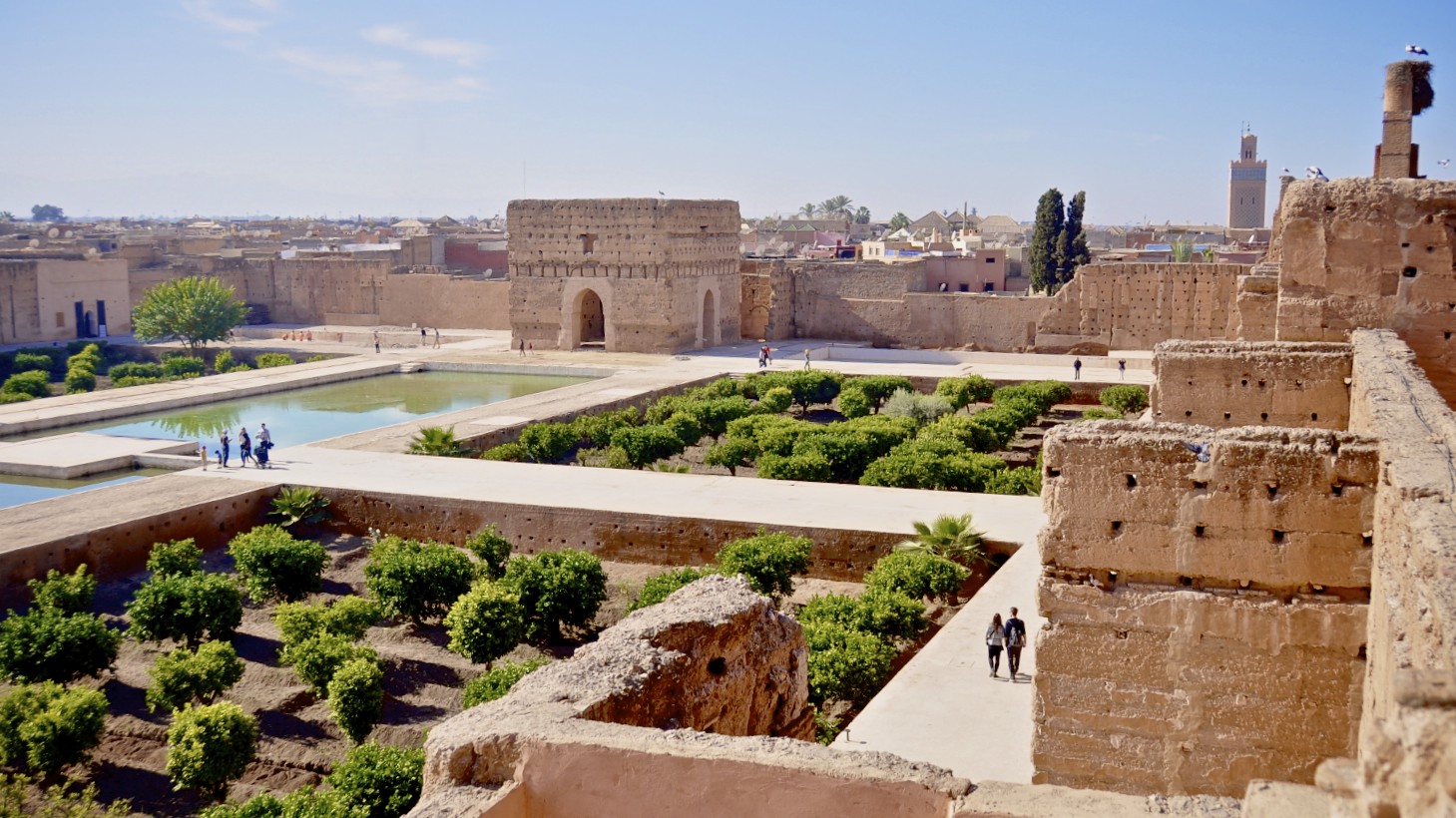
Founded in the 11th century by the Almoravid dynasty, Marrakech became a masterpiece of hydraulic planning.
The Almoravids introduced an advanced khettara network to supply the city. Later, the Almohad dynasty expanded this system, integrating it into monumental architecture and urban life.
The Agdal and Menara Gardens
- Agdal Gardens
- Menara Gardens
These vast agricultural gardens relied on massive reservoirs fed by khettaras and seasonal waters from the Atlas Mountains. They demonstrate how irrigation was not only functional but also aesthetic and symbolic—water as power, paradise, and political legitimacy.
2. Fez: The City of Flowing Water
In Fez, water flows visibly through the medina, creating a living hydraulic organism.
- The Oued Fes divides into multiple channels
- Supplies homes, mosques, fountains, and artisan workshops
- Powers traditional industries such as tanneries
Fez represents a rare example where water circulation is fully integrated into daily urban life.
IV. Public Fountains: Social, Spiritual, and Artistic Landmarks
1. The Role of Public Fountains (Sabils)
Public fountains, often called sabils, are among the most visible expressions of Morocco’s water heritage.
They served multiple functions:
- Providing free drinking water (an act of charity in Islam)
- Supporting ablutions before prayer
- Acting as social gathering points
In Islamic culture, offering water is considered a continuous charity (sadaqa jariya), linking fountains to spiritual merit.
2. Architectural and Decorative Richness
Moroccan fountains are masterpieces of craftsmanship, combining:
- Zellij tilework (geometric mosaics)
- Carved plaster (gypsum)
- Cedar wood canopies
- Calligraphy with Quranic inscriptions
A famous example is the Nejjarine Fountain, a jewel of Moroccan artistry.
In Marrakech, fountains are embedded into the walls of mosques, riads, and streets, often discreet yet deeply integrated into urban rhythm.
V. Water, Power, and Governance
Water management in Morocco was not only technical—it was political.
- Sultans and dynasties controlled major water infrastructures
- Allocation of water followed strict legal frameworks
- Communities developed systems of shared responsibility
Control of water symbolized authority, especially in arid environments where survival depended on it.
VI. Cultural and Symbolic Dimensions
Water in Moroccan culture carries deep symbolic meanings:
- Purity and spirituality (ritual washing)
- Paradise imagery (gardens with flowing water)
- Life and continuity in desert landscapes
The design of riads—with central fountains and gardens—echoes the Quranic vision of paradise: a place beneath which rivers flow.
VII. Continuity and Challenges in the Modern Era
Today, many traditional systems face challenges:
- Decline of khettaras due to modernization and groundwater depletion
- Urban expansion disrupting historic water networks
- Climate change increasing water scarcity
However, there is a growing movement to preserve this heritage:
- Restoration of historic fountains
- Revival of traditional irrigation knowledge
- Integration of ancient techniques into sustainable development
VIII. A Living Heritage
The irrigation systems and public fountains of Morocco are not relics of the past—they are living testimonies of a civilization that mastered water with intelligence, beauty, and respect.
In cities like Marrakech, beneath the red walls and vibrant souks, an invisible network still whispers the story of centuries-old engineering. Every fountain, every canal, every garden reflects a philosophy where water is not merely consumed, but honored.
Conclusion
The Moroccan hydraulic heritage is a fusion of science, art, spirituality, and community. From the silent underground khettaras to the ornamented public fountains, this system reveals a deep ecological wisdom—one that modern societies are only beginning to rediscover.
It is a heritage that flows through time, shaping landscapes, cities, and identities—an enduring dialogue between الإنسان (human), الأرض (earth), and الماء (water).