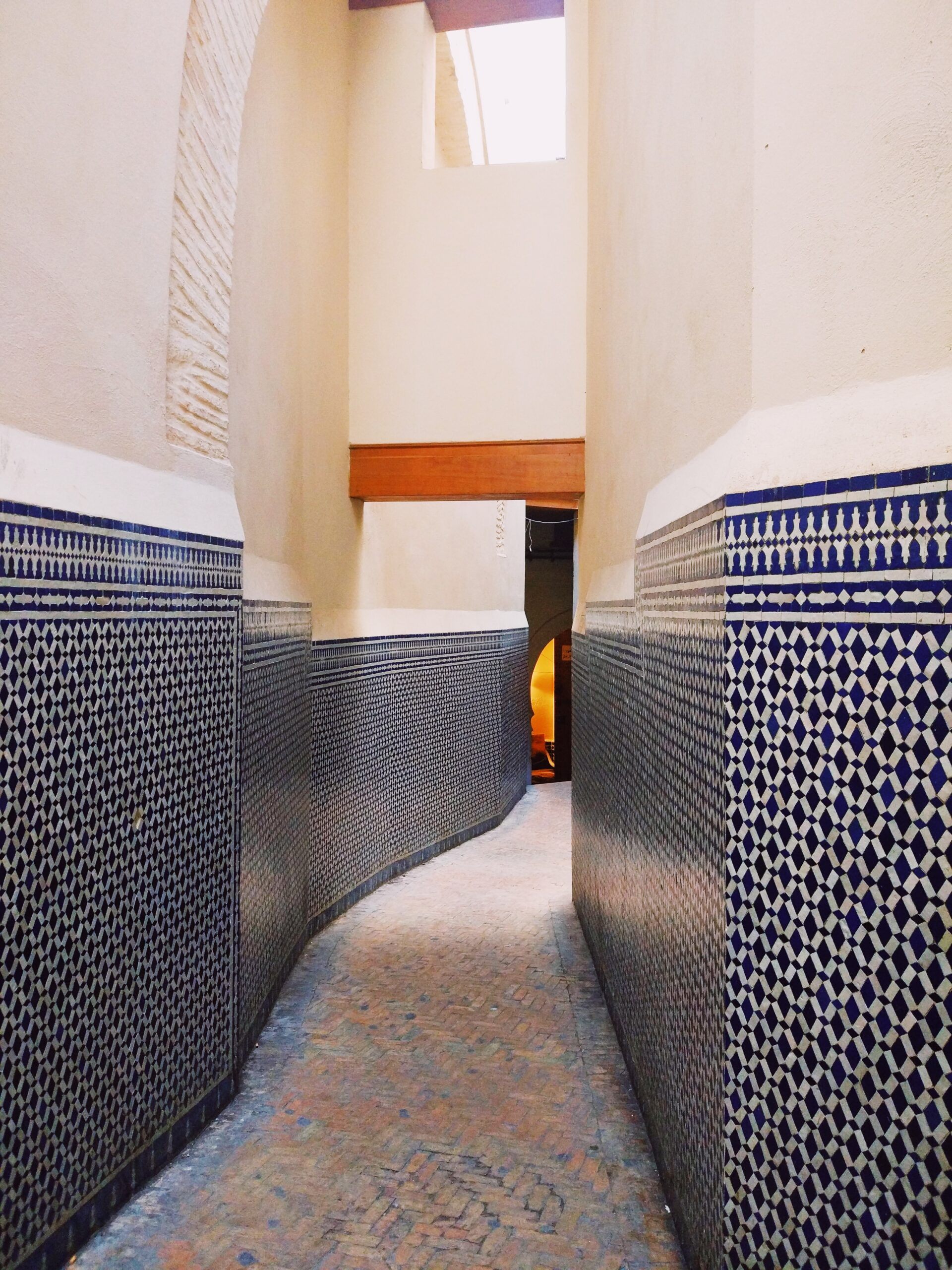
Morocco is far more than a destination—it is one of the world’s most inspiring creative landscapes. For centuries, its artisans have transformed earth, stone, clay, wood, metal, leather, and textiles into objects of remarkable beauty, where technical mastery meets artistic expression. Today, this living heritage has become an essential source of inspiration for architects, interior designers, and design studios seeking authenticity, craftsmanship, and timeless character.
At the Heart of Moroccan Design Lies the Human Hand
True Moroccan design begins with the artisan.
Every piece bears the signature of its maker. Every texture, every carved detail, every hand-cut zellij tile, every woven textile, and every sculpted surface reflects generations of knowledge passed from master to apprentice. These are not simply products—they are expressions of culture, identity, and human creativity.
In an age of mass production, Morocco offers something increasingly valuable: individuality, authenticity, and soul.
A Living Design Culture
Moroccan craftsmanship is not preserved behind museum walls—it is alive.
Across Marrakech, Fez, Safi, Tamegroute, and countless workshops throughout the country, artisans continue to practice centuries-old techniques while collaborating with today’s leading architects, designers, luxury hotels, and international brands. Tradition here is not static; it continually evolves to meet contemporary design language.
The Beauty of Handmade
Natural imperfections are not flaws—they are the essence of handcrafted excellence.
The subtle variations in zellij, the richness of handwoven textiles, the depth of tadelakt plaster, the warmth of carved cedar wood, the elegance of brass, and the organic character of pottery create interiors with authenticity, texture, and emotional depth that industrial manufacturing cannot reproduce.
These materials do more than decorate a space—they give it identity.
Why Designers Choose Morocco
Morocco offers an exceptional combination of creativity, technical expertise, and artisanal diversity rarely found anywhere else.
Design professionals are drawn by:
- Exceptional craftsmanship passed down through generations.
- Natural and sustainable materials.
- Endless possibilities for bespoke commissions.
- Collaboration directly with master artisans.
- Rich architectural heritage blending Berber, Arab, Andalusian, African, and Mediterranean influences.
- The ability to create interiors that are both contemporary and deeply rooted in cultural authenticity.
Design with Meaning
The future of luxury is no longer defined by rarity alone—it is defined by meaning.
Today’s clients seek spaces with narrative, provenance, and emotional connection. Moroccan craftsmanship answers this demand by offering objects created by real hands, using traditional techniques refined over centuries, each carrying its own story and cultural significance.
Beyond Decoration
Moroccan craftsmanship is not an accessory—it is architecture.
It shapes space through light, texture, geometry, proportion, and materiality. Whether through handcrafted zellij, sculpted plaster, carved wood, woven fibers, or contemporary ceramic forms, Moroccan artisans contribute to the architectural language itself.
For designers, Morocco is not simply a place to source beautiful objects—it is a creative partner.
Morocco: The Future of Contemporary Craftsmanship
As the global design industry increasingly values sustainability, authenticity, local production, and human-centered design, Morocco stands at the intersection of heritage and innovation.
Its artisans continue to preserve centuries of knowledge while embracing contemporary aesthetics, making the country one of the world’s most exciting destinations for architecture, interior design, and collectible craftsmanship.
Morocco is more than a source of inspiration.
It is a place where heritage becomes contemporary design, where craftsmanship becomes innovation, and where every handmade creation tells a story that no machine can ever replicate.