

Islamic architecture in Morocco is one of the most refined and enduring expressions of cultural identity in the Muslim world. Blending Arab, Berber (Amazigh), Andalusian, and sub-Saharan influences, it represents over twelve centuries of artistic, religious, and social evolution. The architecture is not merely decorative—it is a living language of faith, harmony, and geometry. From the medinas of Fez and Marrakesh to the palaces of Meknès and mosques of Casablanca, Moroccan Islamic architecture is defined by a profound sense of unity, proportion, and craftsmanship.
2. Historical Background
a. The Arrival of Islam (7th–8th centuries)
Islam was introduced to Morocco in the late 7th century during the Arab expansion across North Africa. The first Islamic buildings were modest mosques and fortresses reflecting early Arab architectural simplicity. However, the new faith merged with local Amazigh traditions, giving rise to a distinctly Moroccan interpretation of Islamic space and ornamentation.
b. The Idrisid Period (8th–10th centuries)
The foundation of Fez by Idris I and Idris II marked the beginning of Morocco’s architectural identity. The Al-Qarawiyyin Mosque (founded in 859) is the most emblematic monument of this era. Expanded through successive dynasties, it remains one of the oldest functioning universities in the world and a model for subsequent Moroccan mosques.
c. The Almoravid and Almohad Dynasties (11th–13th centuries)
The Almoravids unified Morocco and extended their empire into Al-Andalus (southern Spain). They introduced a refined Andalusian aesthetic marked by elaborate stucco work, muqarnas (stalactite ornamentation), and carved cedarwood. The Ben Youssef Mosque in Marrakesh and parts of the Qarawiyyin reflect their style.
The Almohads, who followed, emphasized monumental scale and austere geometry, rejecting excessive ornamentation. Their architecture was marked by the use of the horseshoe arch, the minaret tower, and the T-plan mosque layout. The Kutubiyya Mosque in Marrakesh, the Hassan Tower in Rabat, and the Giralda in Seville stand as masterpieces of this period.
d. The Marinid and Saadian Dynasties (13th–17th centuries)
The Marinids fostered education and urban embellishment, constructing madrasas (theological schools) characterized by intricate tilework (zellij), carved plaster (gebs), and cedarwood ceilings. The Bou Inania and Al-Attarine Madrasas in Fez are prime examples, blending spirituality with aesthetic sophistication.
The Saadians continued this artistic legacy, epitomized in the Saadian Tombs in Marrakesh—an exquisite ensemble of marble, gold leaf, and zellij mosaics showcasing Moroccan craftsmanship at its height.
e. The Alaouite Dynasty (17th century–present)
The Alaouites further consolidated Moroccan architectural identity, restoring historic monuments and commissioning new works. The royal palaces of Meknès, built by Sultan Moulay Ismaïl, reveal monumental planning and opulent gates like Bab Mansour. In the 20th century, the tradition continued with the construction of the Hassan II Mosque in Casablanca—a modern marvel that merges ancient artisanal techniques with contemporary engineering.
3. Architectural Principles and Spiritual Meaning
Islamic architecture in Morocco follows the spiritual principle of Tawhid—the unity of God. This metaphysical unity manifests in symmetrical layouts, repeated geometric patterns, and balanced proportions. Ornamentation, rather than being merely decorative, serves to reflect divine order and infinity.
- Geometry and Proportion symbolize universal harmony.
- Calligraphy enshrines verses from the Qur’an, merging word and form.
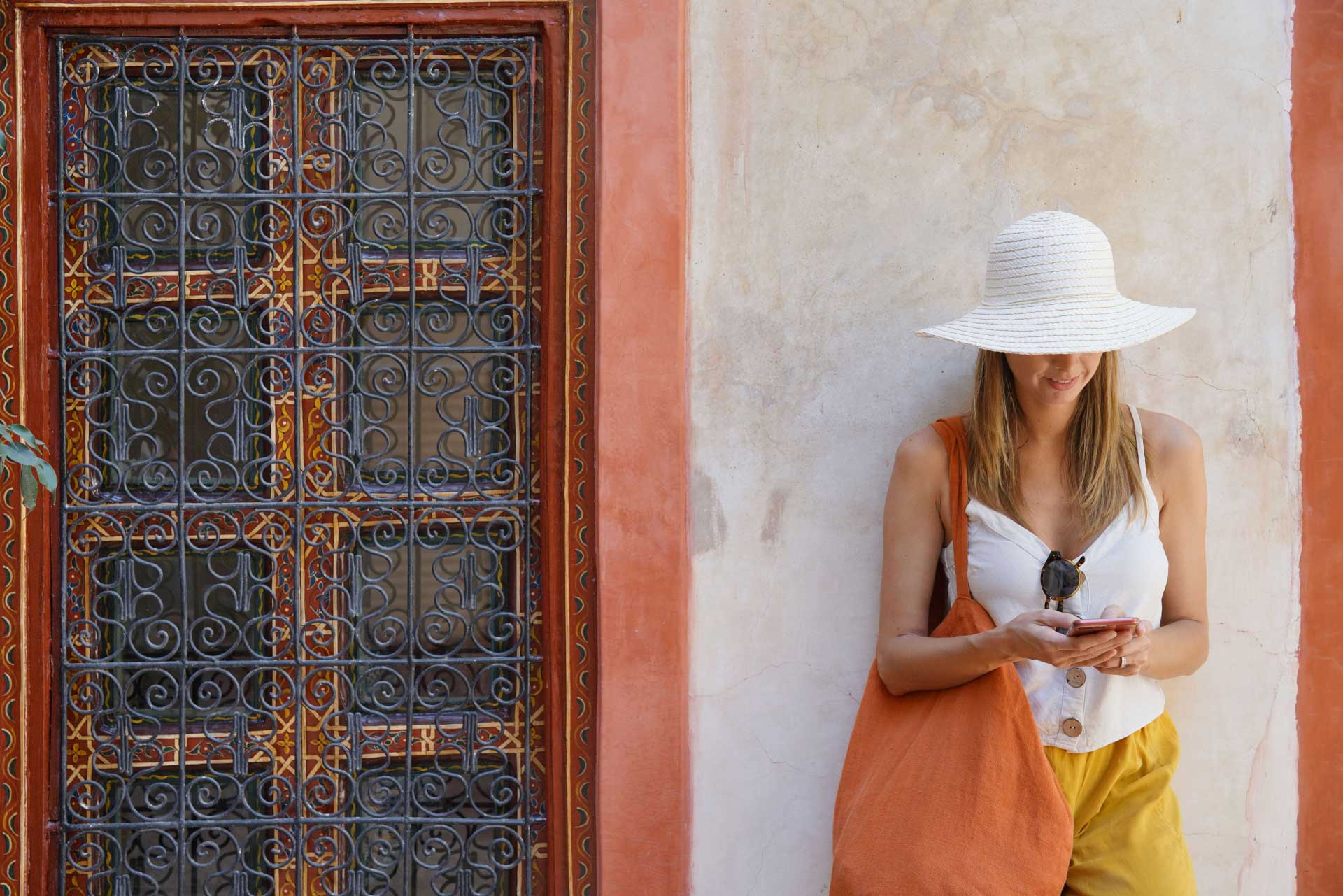
- Light plays a sacred role—filtered through mashrabiyas (lattice screens) and courtyards, it evokes divine presence.
- Spatial Hierarchy creates transitions from the public (street) to the private (courtyard), reflecting modesty and contemplation.
4. Key Architectural Elements
a. The Courtyard (Sahn)
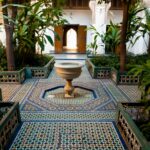
Almost every Moroccan building—mosque, madrasa, riad, or palace—centers around a courtyard. It provides ventilation, light, and a contemplative heart. The courtyard often features a fountain, symbolizing purity and life.
b. The Mosque
Moroccan mosques follow a hypostyle plan with multiple aisles parallel to the qibla wall, a mihrab (prayer niche), and a minbar (pulpit). The minaret, often square and topped with decorative merlons and copper globes, became a hallmark of Moroccan skylines.
c. The Madrasa
Educational and residential in function, madrasas like the Ben Youssef Madrasa in Marrakesh or Bou Inania in Fez are masterpieces of sacred geometry and craftsmanship. Their small student cells surround richly decorated courtyards, creating an atmosphere of spiritual focus.
d. The Hammam and Foundouk
Hammams (public baths) and foundouks (caravanserais or inns) reflect the social dimension of Islamic architecture—spaces for hygiene, hospitality, and commerce, built with equal aesthetic care.
e. The Palace and Riad
Royal and domestic architecture developed around the concept of the riad—a house built around an inward-facing garden. The garden, often divided into four quadrants (a reflection of paradise in Islamic cosmology), represents balance and serenity.
5. Materials and Techniques
Moroccan Islamic architecture is defined by its material richness and craftsmanship:
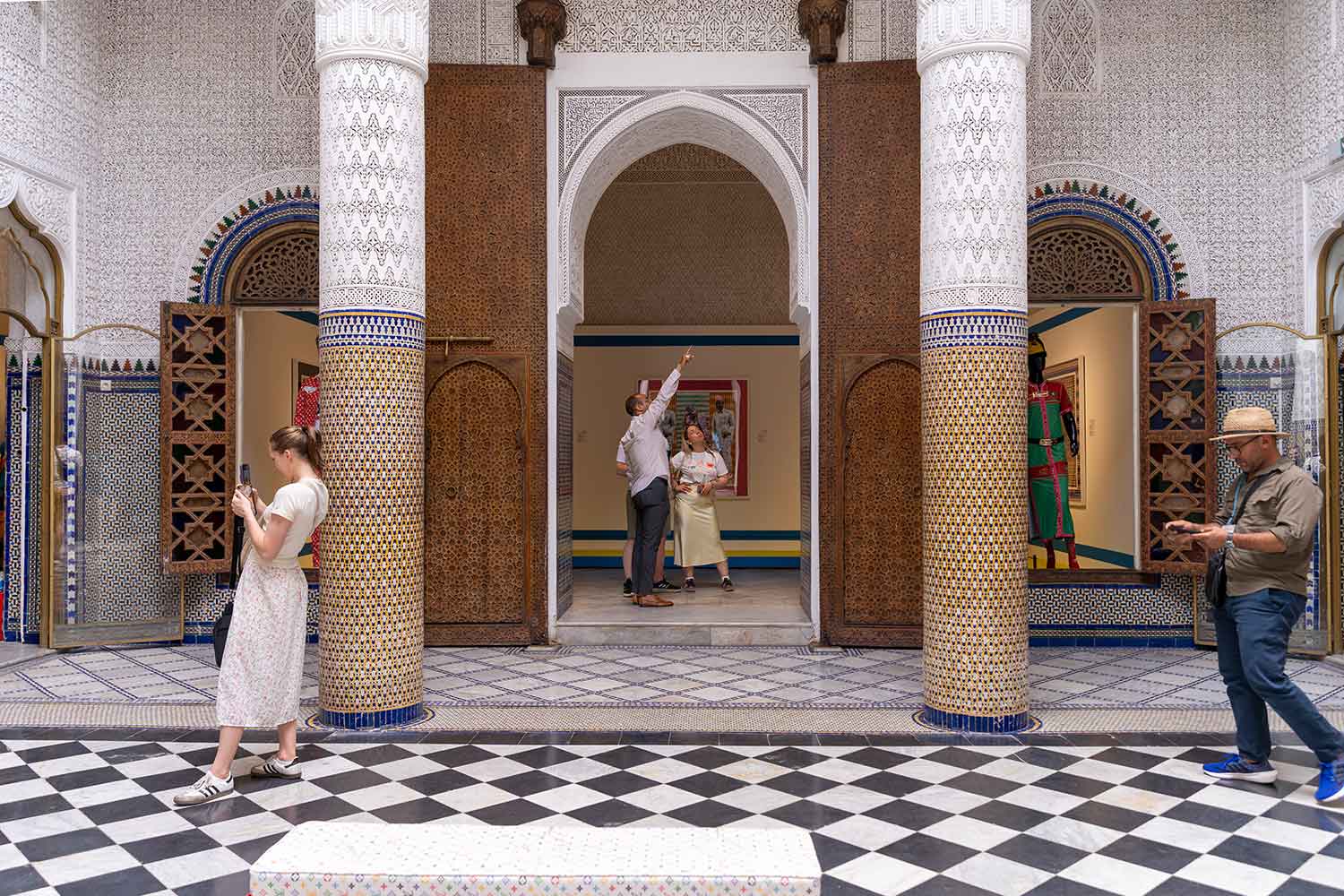
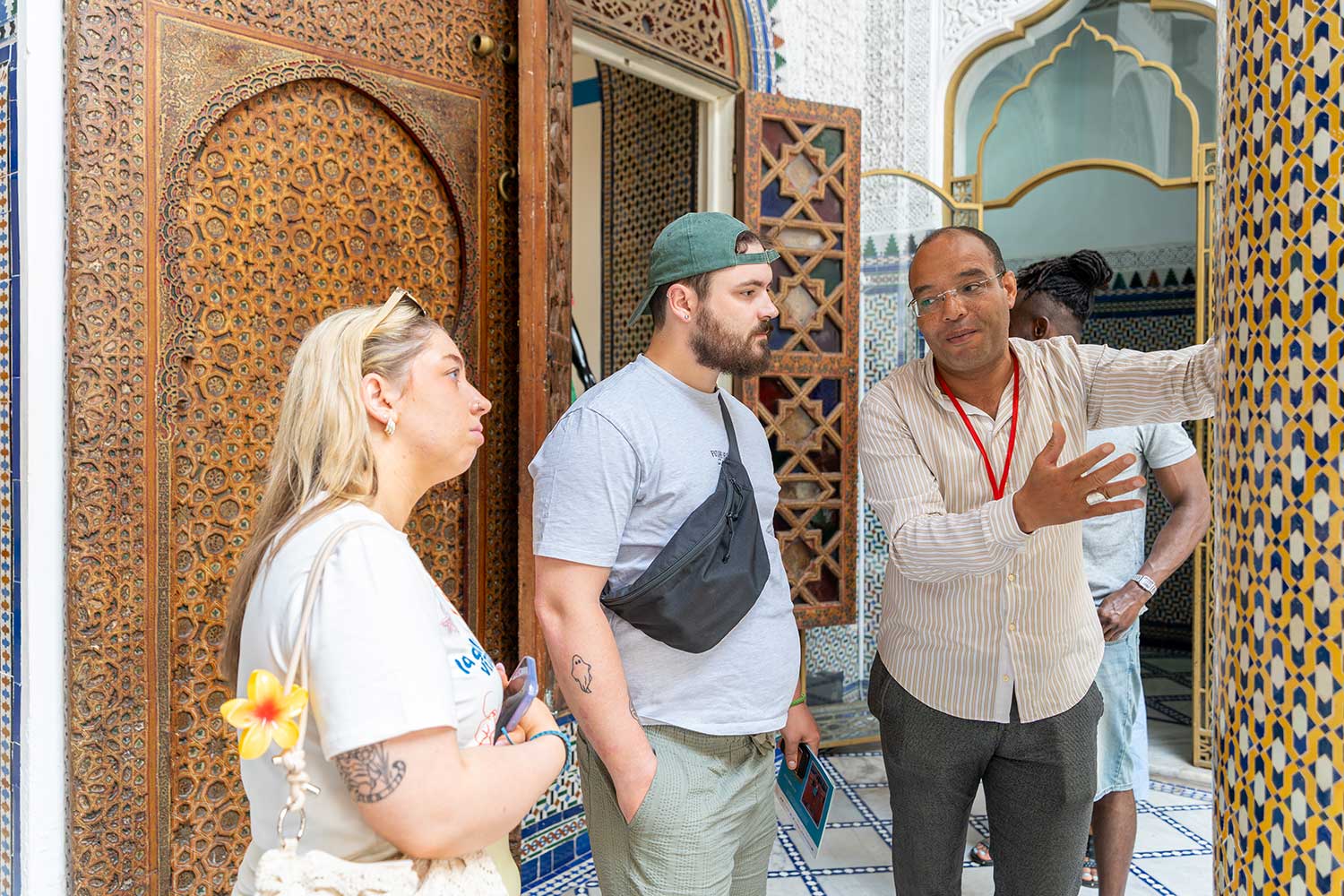
- Zellij (tile mosaic): Hand-cut glazed tiles assembled into geometric compositions, symbolizing infinity.
- Carved Stucco (Gibs): Used for intricate arabesques, vegetal motifs, and Quranic inscriptions.
- Cedarwood: Employed for carved ceilings and mashrabiyas, particularly from the Middle Atlas region.
- Tadelakt: A polished lime plaster used on walls, providing a soft, water-resistant surface.
- Brick and Rammed Earth (Pisé): Common structural materials, especially in Marrakesh and southern Morocco.
Each medium requires specialized artisans—maâlems—who transmit their craft through generations, ensuring continuity of tradition.
6. Regional Variations
- Fez: Known for its scholarly and religious monuments, refined zellij, and elegant madrasas.
- Marrakesh: Characterized by warm red tones of pisé, monumental mosques, and lush riads.
- Meknès: The imperial capital of Moulay Ismaïl, featuring grand gates and palace complexes.
- Chefchaouen and the North: Blend Andalusian and local Amazigh elements, with blue-washed façades and delicate stucco.
- The South (Tafilalt, Aghmat, Taroudant): Influenced by desert architecture—kasbahs and ksour made of rammed earth, blending Islamic and Amazigh design.
7. The Legacy and Modern Continuation
Today, Moroccan Islamic architecture continues to evolve, balancing heritage and modernity. Contemporary architects draw inspiration from traditional motifs while using modern materials. The Hassan II Mosque exemplifies this synthesis—constructed with traditional craftsmanship but equipped with advanced engineering, including a retractable roof and earthquake resistance.
In contemporary urban design, the revival of zellij, tadelakt, and carved wood reflects Morocco’s commitment to preserving its cultural DNA while adapting to modern lifestyles. New hotels, museums, and cultural centers reinterpret Islamic forms, demonstrating the timeless relevance of Moroccan architectural language.