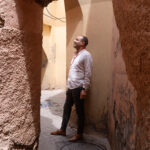
Behind discreet walls and unassuming entrances, the riads of Marrakech reveal a world of exceptional beauty, architectural intelligence, and artistic refinement. These historic courtyard houses represent one of the most sophisticated expressions of Moroccan and Islamic architecture, conceived not only as residences but as carefully orchestrated spaces where architecture, nature, and craftsmanship coexist in perfect harmony.
The concept of the riad is deeply rooted in the Arabic word rawda, meaning garden or paradise. This philosophy is materialized through the central courtyard, a defining element around which the entire house is organized. Often adorned with orange trees, jasmine, and a marble or zellij fountain, the courtyard functions as a sensory and climatic core. It cools the surrounding rooms naturally, diffuses light gently throughout the interior, and creates an atmosphere of serenity that contrasts profoundly with the vibrant energy of the medina beyond the walls. This inward-facing design reflects a refined understanding of privacy, comfort, and contemplation—values central to Moroccan culture.
From an architectural perspective, riads demonstrate remarkable spatial intelligence. Proportions are meticulously calculated, circulation flows naturally around the courtyard, and the relationship between solid and void is carefully balanced. High walls, limited exterior openings, and thick earthen or masonry structures protect the interior from heat and noise, while open galleries, arcades, and terraces enhance ventilation and visual harmony. Rooftop terraces extend the architectural experience vertically, offering panoramic views over the medina, the Atlas Mountains, and the minarets of Marrakech—spaces traditionally used for evening gatherings, contemplation, or sleeping during warm summer nights.
For architecture enthusiasts and design connoisseurs, riads are extraordinary living museums of Moroccan craftsmanship. Every surface becomes a canvas for artisanal excellence. Zellij tilework, composed of hand-cut geometric pieces, decorates floors, fountains, and lower walls with hypnotic precision. Above, finely carved stucco (gebs) panels display vegetal and calligraphic motifs, their lace-like textures capturing light and shadow with remarkable subtlety. Ceilings crafted from cedar wood are painted in vibrant zouak patterns or sculpted with traditional techniques, revealing a deep mastery of color, symmetry, and rhythm.
These decorative elements are never purely ornamental. Rooted in Islamic artistic principles, their geometry expresses balance, infinity, and unity, while vegetal motifs evoke nature and spiritual growth. The absence of figurative representation reinforces a sense of abstraction and timelessness, allowing visitors to experience space as both artistic and meditative.
In the context of luxury tourism, restored riads offer an unparalleled hospitality experience—one that transcends conventional luxury. Here, luxury is defined by authenticity, intimacy, and craftsmanship rather than excess. Many riads have been meticulously rehabilitated by architects and artisans who respect traditional techniques while discreetly integrating modern comfort. Handcrafted furnishings, bespoke textiles, curated art collections, and refined lighting create interiors that feel both historic and contemporary. Personalized service, private courtyards, hammams, and rooftop dining elevate the stay into a deeply immersive cultural experience.
For curated architecture tours and art-focused journeys, riads provide a unique lens through which to understand Marrakech. They tell stories of social organization, climate adaptation, artistic transmission, and urban life within the medina. Visiting a riad is not merely entering a building—it is stepping into a philosophy of living where architecture serves the body, the senses, and the spirit.
Today, the riads of Marrakech stand as powerful symbols of cultural preservation and creative reinvention. Whether experienced as private residences, boutique hotels, artist houses, or cultural salons, they continue to inspire architects, designers, and travelers from around the world. Timeless yet alive, discreet yet opulent, Marrakech riads remain true jewels of Moroccan architecture—an essential encounter for those seeking beauty, depth, and meaning in the art of travel.