Palais Bahia stands as one of Marrakech’s most breathtaking architectural treasures, a dazzling expression of Moroccan artistry, power, and refined living. Built in the late 19th century, the palace was commissioned by Si Moussa, Grand Vizier to the Sultan, and later expanded by his son Bou Ahmed, who envisioned creating the most magnificent palace of his time. The name Bahia means “brilliance” or “beauty,” and every corner of the palace lives up to this promise.
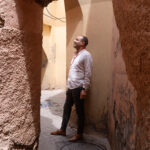
Spread across nearly eight hectares, the palace is not a single structure but a harmonious composition of courtyards, gardens, riads, reception halls, and private apartments. Rather than grand exterior façades, the splendor of Bahia is revealed inwardly — a defining principle of traditional Moroccan architecture, where beauty is reserved for those who enter.
The palace is a masterpiece of Islamic-Andalusian architectural heritage, blending Moroccan craftsmanship with influences from Andalusia. Its design follows the concept of spatial progression: from public to private, from modest to opulent, guiding visitors through a sequence of increasingly intimate and richly decorated spaces.
One of the most striking elements of Palais Bahia is its extraordinary decorative artistry. The ceilings are adorned with intricately painted and carved cedar wood, featuring geometric patterns, floral motifs, and vivid natural pigments. These hand-painted ceilings, known as zouak, represent the height of Moroccan decorative art and demonstrate the mastery of the palace’s craftsmen.
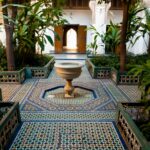
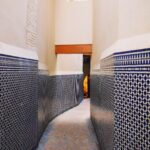
The walls and columns are dressed in fine stucco plasterwork, carved into delicate arabesques and calligraphic patterns that play with light and shadow. This lace-like ornamentation creates a sense of elegance and lightness, transforming solid walls into works of art. Below, vibrant zellij tilework covers floors, fountains, and lower walls. Each tile is hand-cut and assembled into complex geometric compositions, reflecting both mathematical precision and spiritual symbolism.
At the heart of the palace are its serene courtyards, which embody the essence of Islamic garden design. Orange trees, jasmine, banana plants, and fragrant flowers soften the architecture and create a microclimate of shade and coolness. Water features — fountains and channels — bring movement, reflection, and a soothing soundscape, symbolizing purity and paradise in Islamic culture. These gardens are not merely decorative; they are essential architectural elements that balance structure with nature.
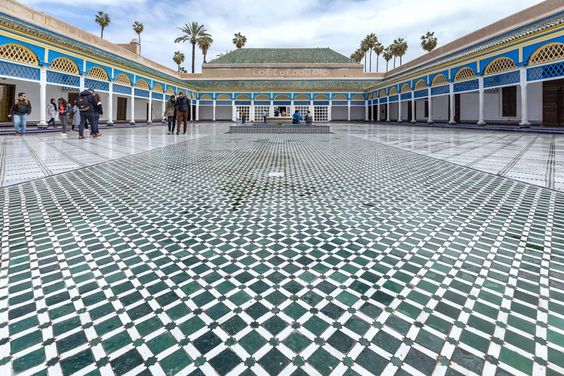
The Grand Courtyard, paved in white Carrara marble and surrounded by elegant arcades, is one of the most iconic spaces in the palace. It once served as a ceremonial area, reflecting the wealth and prestige of its owner. Nearby, the Grand Salon reveals monumental cedar ceilings and richly ornamented surfaces that would have hosted official receptions and gatherings of the elite.
In contrast, the private riads and apartments of the palace offer a more intimate atmosphere. These spaces were designed for the family and the harem, each courtyard leading to rooms arranged around a central garden. This inward-focused layout ensured privacy, comfort, and a close relationship with nature — a key feature of Moroccan domestic architecture.
What makes Palais Bahia truly exceptional is the human scale of its luxury. Unlike European palaces that impress with height and vast façades, Bahia captivates through detail, craftsmanship, and sensory experience. Light filters softly through carved screens, shadows dance across patterned tiles, and the scent of gardens mingles with the coolness of shaded corridors. It is an architecture meant to be felt as much as seen.
Today, Palais Bahia remains a living testimony to the golden age of Moroccan craftsmanship. It showcases the collaborative genius of artisans — woodcarvers, plaster masters, tile makers, and painters — whose skills were passed down through generations. For visitors, architects, designers, and art lovers, the palace offers not only visual splendor but a deep insight into the philosophy of Moroccan space: harmony, balance, privacy, and beauty rooted in tradition.
More than a historical monument, Palais Bahia is an immersive journey into Moroccan art de vivre — a place where architecture, nature, and craftsmanship unite to create one of Marrakech’s most iconic and unforgettable masterpieces.