Moroccan architecture is a living testament to the country’s rich history and cultural diversity, shaped by centuries of migration, trade, and conquest. From the windswept Roman ruins of Volubilis to the contemporary skylines of Casablanca, each era and influence has left a distinct imprint on Morocco’s built environment, weaving together a mosaic of styles, materials, and symbolism.
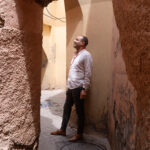
At the heart of this architectural evolution lies Morocco’s diverse geography—ranging from the coastal plains of the Atlantic and Mediterranean to the majestic Atlas Mountains and the arid expanse of the Sahara. Each region gave rise to unique architectural responses adapted to climate, materials, and lifestyle. In the north, whitewashed towns like Chefchaouen and Tetouan reveal Andalusian influences; in the south, earthen kasbahs and ksour stand as masterpieces of desert architecture, built from clay and straw to harmonize with the landscape.
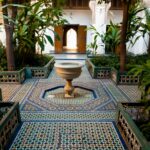
The Roman presence in Morocco, particularly at Volubilis and Lixus, introduced the earliest urban planning traditions, characterized by grand basilicas, triumphal arches, and mosaics that testify to a refined sense of geometry and proportion. With the arrival of Islam in the 7th century, Moroccan architecture entered a golden age that blended local Amazigh traditions with Arab-Andalusian artistry. The great dynasties of the Almoravids, Almohads, and Marinids enriched the country with monumental mosques, madrasas, and palaces, featuring intricate stucco carvings, carved cedar ceilings, and the iconic zellij tilework—a form of geometric poetry in glazed clay.
Cities like Marrakech, Fes, and Meknes became centers of innovation where form met spirituality. The Koutoubia Mosque, Bou Inania Madrasa, and Bab Mansour Gate stand as masterpieces of proportion, craftsmanship, and symbolism. Within the medinas, narrow streets, riads, and fountains reflect a human-scaled architecture that prioritizes privacy, shade, and social life—embodying the essence of Moroccan urban identity.
The 20th century introduced another transformative chapter with the French Protectorate (1912–1956). French planners such as Henri Prost introduced modern infrastructure and a new urban order, creating neighborhoods that harmonized European urbanism with Moroccan tradition. In cities like Casablanca and Rabat, this fusion produced striking examples of Art Deco and Neo-Moorish architecture, seen in landmarks such as Casablanca’s Central Post Office and the famous Villa des Arts.
Today, Moroccan architecture continues to evolve, blending modern design with deep respect for heritage. Contemporary architects reinterpret traditional elements—courtyards, mashrabiya screens, local materials—within sustainable and innovative frameworks. Projects such as the Hassan II Mosque, the Mohammed VI Museum of Modern and Contemporary Art, and new eco-lodges in the Atlas Mountains showcase how Morocco bridges the past and the future.
Ultimately, Moroccan architecture is more than a visual language—it is a reflection of the nation’s soul and history, shaped by centuries of dialogue between civilizations. It tells the story of adaptation, beauty, and balance between tradition and modernity, between earth and light, between the sacred and the everyday.